Salmon Head Tempura

Salmon Head Tempura


A Canadian adaptation of Japanese tempura. It's often to be offered at Japanese restaurants and served with a special sauce.

Salmon heads and trims are common to be sold at the markets here.  At Asian markets, I often see salmon heads on sale. 

Special for this tempura, the Japanese restaurants in town don't serve with tentsuyu (Japanese: ????/??), regular tempura dipping sauce.  Hence, I re-created the sauce at home and perfect match to the one that I used to have.  It is a mix of miso, ginger, mirin, ground sesame seed, garlic, soy sauce and sugar. In this case I substituted for honey. 

I figured out why they serve with this special sauce.  By dipping pieces of salmon heads tempura into the sauce, it reduces the odour of the salmon itself.   In this recipe, I specifically had to marinate them with minced gingers and garlics before dipping into tempura batter.

Finally, I found the perfect composition to what I tasted for the sauce. The batter's recipe was adapted from Marc of No Recipes.

Salmon Heads Tempura
 

Ingredients:
2 salmon heads, halved of each head
minced garlic and gingers for marinating

Tempura Batter:
1 large egg white
1 cup ice cold water + 2 ice cubes
1 cup sifted unbleached flour put in freezer
1/2 tsp kosher salt

Dipping Sauce:
2 tbsp aka miso (red miso)
2 tbsp low-sodium soy sauce
2 tbsp mirin
2 tbsp honey
2 tsp ground sesame seed
2 cloves garlic, minced
2 tsp minced ginger

Directions:
Prepare the Salmon Heads:
1. Rinse off halved salmon heads under cold running water. Rub minced garlic and gingers on, marinate for 20 minutes and keep them in the fridge.

2. Rinse them off once more and pat dry.

Tempura:
1. Get a wire rack ready for the tempura by covering it with a layer of brown paper bag.

2. In a heavy bottomed pan, add about 3 cm of oil. Heat the oil until it reaches 340 F then quickly make the batter. For the batter, you want to whisk the egg yolk into 1 cup of ice cold water then dump it all into the cold flour then gently stir. The key here is that everything is very cold and that you don�t stir it too much (having lumps is fine). The batter should be like thin pancake batter, if it�s too thick, add a few more tablespoons of ice water.

3. Use a fork, quickly dip each halved salmon head in the batter shaking off the excess and carefully drop into the hot oil.

Dipping Sauce:
Combine everything.
» Read More...

Momo - Japanese & Korean Restaurant

Gae Jang Baek Ban

Please find 3 more pictures below that have been in my file since early January and April this year. I went to this place about 3 times already.

I first came to try this restaurant with a friend and chose Ohjinguh Bokkeum meal. It came with onjinguh bokkeum (Stir Fried Spicy Squid with Vegetables), stew potatoes, kimchi, stir fry bean sprouts and rice.

Ohjinguh Bokkeum Meal


Then, I recommended to my husband and he agreed to try. Even though this Japanese and Korean restaurant isn't big, it has accommodated my husband who loves Japanese food and myself, the Korean food junkie. As usual, he went for the sashimi and I picked the spicy dishes. So, it was my second visit; I chose Gae Jang Baek Ban due to my high curiosity of raw crab taste. It was really really spicy, but good; a mix sweetness and spicy of gochujang. The blue crab tasted fresh no fishy or unpleasant odour. The sashimi was good too (no picture for that as you know how it looks already).

Ohjinguh BokkeumKimchi


With medium range prices, friendly service and efficient, you can see why I came back to this restaurant for 3 times. However, for myself, I'd rather stick to their sashimi and Korean dishes.

Momo Japanese & Korean on Urbanspoon
» Read More...

Sushi King

Umecchi


Since we barely pass by this area, we never knew this new sushi restaurant, Sushi King. From St. Vital Centre, we decided to eat at Sushi King. I felt in love with the interior design. It's very Easter colour and modern.

When I saw the chef, I was quite surprised. I noticed it was the same guy who worked at Sushi Train on Pembina.

After posting the photos on my Facebook, a friend who used to work close to this area told me that he was the one who worked at Sushi Train. Now, he owns this Sushi King.

Most of Sushi restaurants in town have similarity in menu. Sushi King has one menu that I haven't seen before, Umecchi (above picture). Umecchi is a sushi roll with Umeboshi and Spinach.

Umeboshi is a pickled ume fruits common in Japan. Ume (Prunus mume) is a species of fruit-bearing tree in the genus Prunus, which is often called a plum but is actually more closely related to the apricot.

From my opinion, the miso soup isn't as good as other Japanese restaurants serve. It's too watery. Other foods are ok, but it's not the best I've ever had. Overall, this place has unique design with their special menu that keeps changing. I was a bit disappointed that Sushi King doesn't have takoyaki, but I was happy with their Sunomono Salad with choices of crabmeat, shrimp, octopus. I picked crabmeat for my salad.


Sunomono Salad


Sunomono salad consists harusame noodles, English cucumber, choice of seafood. Harusame Noodles are thin, translucent Japanese noodles, slightly thicker than glass noodles but still almost as thin as hair.

Assorted NigiriA Small Cute Dish


To see more menu, you can visit Sushi King website.

Sushi King on Urbanspoon
» Read More...

Ichiban and Niban Dashi Stocks

Ichiban and Niban Dashi

One day, I stumbled upon Serge the Concierge. Serge Lescouarnec, the owner of the blog offered a Cooking and Manga on Menu for Everyday Harumi book contest part 3. I submitted my answer of a Manga on Food and Cooking. Manga was a part of my childhood. I still recalled, I used to watch "Born to Cook" or "Mr. Ajikko" on TV every Sunday morning. I wouldn't have my breakfast until this series was on. I was so happy that the Manga's story brought me to get Everyday Harumi cookbook.


Eventually, I couldn't see the book since I asked Serge to send it to my Winnipeg's address. As I work out of Winnipeg which is in Boissevain, I used to be back on the weekends. However, I hadn't returned to Winnipeg until this weekend.

I was so glad to see that the book has a guidance on how to make dashi from scratch, so I don't need to deal with MSG. The ingredient that I have been trying to avoid and is used in most dashi products.

Making dashi was easy!!! All you need is water, kombu (dried kelp) and katsuobushi (Dried Bonito Flakes). I went to Arirang, a Korean store that has widely selection of Korean and Japanese products. For your information, in Winnipeg, most Japanese/sushi restaurants are owned by the Koreans.

Another information that I need to share, bonito is made from tuna. For Indonesians who live in Sumatra area, you may to substitute bonito with ikan kayu (Acehnese dried skipjack tuna).

On page 19 and 20 of Everyday Harumi cookbook, it is stated that many people who make their own dashi stock will make what is known as ichban dashi (fisrt brew) and niban dashi (second brew). The first is usually used when we need a pure dashi flavour and the second when it is mixed with other ingredients.

You will notice that the Ichiban dashi has a darker colour than the niban one.


Collage of Dashi


Ichiban and Niban Dashi
by Harumi Kurihara

Ingredients:
2x4 inch pieces kombu seaweed (dried kelp)
2 oz katsuobushi (dried bonito flakes)
8 cups water

Directions:

Ichiban Dashi
1. To rempve any excess saltiness from kombu, either quickly wash under cold runnung water and then pat dry or wipe with a damp cloth.

2. In a large saucepan, soak kombu for 30 minutes in 4 cups of water.

3. Put the saucepan over high heat and remove kombu just before the water comes to a boil.

4. Add katsuobushi, bring back to a boil, and then immediately turn off the heat. Let it stand until all the flakes have sunk to the bottom of the saucepan.

5. Pour the mixture through a strainer lined with cheesecloth, leave to cool, keep the dashi stock in the refrigerator until ready to use. Do not discard the used karsuobushi if you want to make a niban dashi stock.


Kombu (Dried Kelp)
Katsuobushi (Dried Bonito Flakes)

Niban Dashi
1. Add the previously used kombu seaweed and katsuobushi to a saucepan together with another 4 cups of water.

2. Put the pan onto medium heat.

3. Remove kombu just before the liquid comes to a boil, then cook for further 3-4 minutes.

4. Pour through a strainer lined with cheesecloth. Cool and store in the refrigerator until ready to use.
» Read More...

Tempura for the Craveness!


Tempura for the craveness! Have you ever get bored of of this Japanese crunchy deep-fried? I never ever get tired of them; furthermore, you will perceive another post of tempura next time. that I have kept since I have been busy with my routine. Eventually, I will post them.


Red Pepper Tempura 2


Red Pepper Tempura
Modified by me

Ingredients:
2 red peppers
1/2 pkg tempura mixed flour ready to use
3/8 cup cold water (4C or 40 F)
1 - 2 tbsp coconut cream powder

Directions:
1. Remove the stem and seeds from each pepper, cut them in quarters, then cut them a half.

2. Combine flour, coconut cream powder and water; whisk quickly. Dip gently red pepper slices into batter. Deep fried in hot oil until it turn golden brown and cooked through. Serve with tentsuya.
» Read More...

Surprised Supper


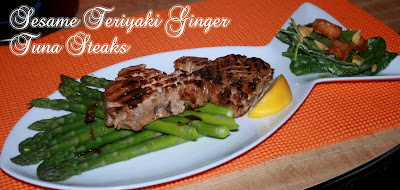
I came home early, opened up the door I smelled something good. My husband planned to surprise me with supper, the supper wasn't ready yet, but I was already at the front door . He prepared tuna steaks, spinach salad and blached asparagus. He marinated yellow fin tuna steaks with sesame, teriyaki and ginger sauce ready to use for few minutes, then seared each side for two minutes. He topped the spinach salad with garlic croutons, almonds, banana chips and raisin. Remain teriyaki marinade mixture was heated up in a microwave, then drizzled over blanched asparagus. The asparagus was also perfect with that sauce.
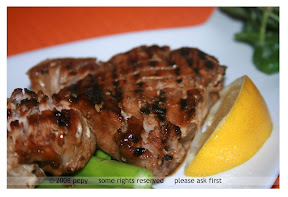
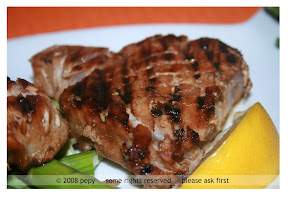
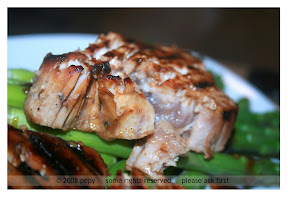
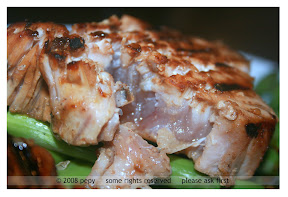
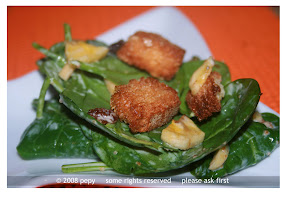


He screwed up with the tuna, he was supposed to drizzle enough oil over the hot grilled pan. So when he seared the tuna and tried to flip them, he had a hard time to flip, some of them were stuck on the pan and fell apart. He wanted to sear tuna all over until golden brown yest still cold and rare inside. Overall he did it, he made rare inside perfectly.


I love those tuna steaks, the rare part reminds me of sashimi tuna taste :) Thank you, Pung.


Spinach Salad with Garlic Croutons, Almonds, Banana Chips and Raisins
» Read More...

Asparagus Beef Bowl

After work, I had no idea what I was going to cook for supper. I had fried rice leftover that I bought at Korean Pavilion and I added gochujang, stir evenly and ready to eat for lunch. As I was having my lunch, I remember one time I saw a asparagus beef bowl recipe at detikfood.com. Beef Bowl is usually served at Japanese restaurants in Indonesia,
since I added gochujang which is known as Korean red pepper paste, this dish is not a Japanese recipe anymore.

I went out to grocery store to buy asparagus and I was ready to make my asparagus beef bowl. As usual, I like to make a bit different from the original recipe.


Ingredients:
300 - 400 g warmed cooked rice (I used short grain rice/sushi rice)

Topping:
1 tbsp olive oil minyak sayur
1/2 - 1 tsp sesame oil minyak sayur
2 cloves garlic, minced
50 g onion, chopped
2 green onions, sliced
200 g veggie ground round (it can be substituted for ground beef)
200 g asparagus, thinly angle cut
2 tbsp hot sauce (I substituted for gochujang)
1/2 tsp chili powder (optional, detikfood's recipe didn't add this)
1 - 1 1/2 tbsp Indonesian sweet soy sauce
4 tbsp Japanese soy sauce
1/2 tsp freshly ground black pepper


Directions:
Topping:


  • Heat olive oil in a skillet at medium-high heat, stir fry garlic, onion and green onion until wilted. in ollive oil.


  • Add asparagus, veggie ground round, add other seasonings, stir evenly until asparagus and veggie ground round are cooked. If you use ground beef , you have to cook until the beef is cooked, then you can add other seasonings and asparagus. Remove from heat.


  • Serving


  • Combine warmed cooked rice with sesame oil. Place rice in a bowl and add asparagus beef mixture over the rice.

  • » Read More...

    Japanese Mixed Curry

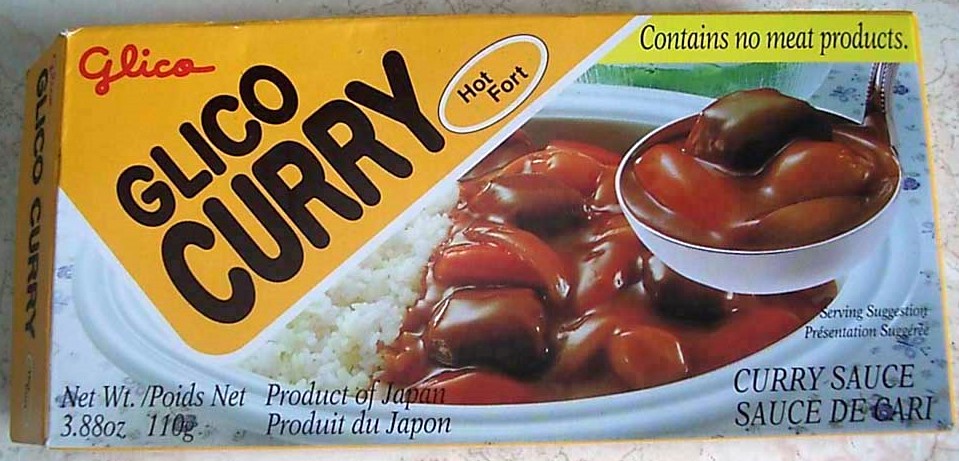
    I grew up with japanese cartoon. One of my favourite was "Born To Cook". It was about a young guy who really wanted to be a chef. He had a cooking battle like Iron Chef. As I remember he cooked Japanese Style Curry, which is looked good. Back then, I didn't know how to make it and I didn't know where I could find the curry sauce ready-to-use, because Japanese ingredients weren't popular yet.
    The first time I made this I put pinneaple, but in this recipe I used tomato instead. I also have my own way to eat this, I served over the noodle.


    Category:
    Soups & Stews
    Style:
    Japanese
    Servings:
    4

    Ingredients:
    225 g boneless and skinless chicken/meat/seafood/tofu (whichever you desire or combine them)
    2 tbsp oil for stir fry
    2 -3 cubes Glico curry sauce
    1 medium carrot
    1 medium onion
    1 medium potato
    2 - 3 cloves garlic, minced
    option your favorit vegetables and fruits (I used tomato)
    cayenne pepper as desired or omit it

    Directions:

    • Cut all ingredients into bite size pieces.
    • In a large skillet, stir fry onion. Add all other ingredients and stir for few minutes.
    • Add 2 cups (500 mlm) of water to the skillet and bring to boil. Cook in medium low heat with a lid for 30 minutes or until tender.
    • Remove from heat and add Glico curry sauce (break into several pieces). Stir until completely melted. Cover and set aside for 10 minutes.
    • Serve with rice, pasta/noodle or bread.
    » Read More...